Promotional Content
Build a Dedicated Workshop in Idaho Engineered for Year-Round Productivity
It starts with the same frustration every winter. You have a project in mind—maybe it’s rebuilding the suspension on the truck, welding a custom rack for the ATVs, or finally organizing the woodworking tools that have been piling up in the corner. But the reality of doing it is a different story. You’re shuffling cars out into the snow just to clear a patch of concrete. You’re working in a dimly lit, uninsulated space where your breath hangs in the air and the tools are so cold they sting your hands through your gloves. By the time you’ve dragged everything out and set up, you’ve lost an hour, and the motivation is draining away with the heat.
For the hands-on homeowner in Idaho, this is a familiar dance. You have the skills, the tools, and the drive to build, fix, and maintain your life, but you are limited by the lack of a dedicated space. A standard two-car attached garage is rarely enough for a serious workflow. It becomes a catch-all for holiday decorations, deep freezers, and muddy boots, leaving zero room for a welding table or a proper mechanic’s setup. The dream isn’t just about having "storage"; it is about establishing a command center—a detached workshop that is yours, independent of the house, where you can leave a project in pieces on the bench without hearing about it at dinner.
Building a dedicated shop in the Intermountain West requires more than just pouring a slab and throwing up four walls. The climate here demands respect. Between the heavy snow loads in the high country, the biting wind that sweeps across the Snake River Plain, and the deep frost lines, a workshop needs to be engineered for survival. This isn’t just a shed; it’s an investment in your productivity and a shield for your most valuable equipment. Understanding how to plan, site, and build this space effectively is the difference between a drafty, damp storage locker and a professional-grade shop that serves you for decades.
Engineering for the High Desert and Heavy Snow
Before you even look at floor plans, you have to look at the ground. In Idaho, the earth moves. The freeze-thaw cycle is powerful enough to heave concrete and twist wood frames if the foundation isn’t handled correctly. Local building codes typically mandate a frost depth of anywhere from 24 to 36 inches, depending on your elevation and county. If you are pouring a traditional foundation, your footings need to reach below that line to prevent "frost heave," which can crack your slab and jam your doors come January. Many builders now opt for monolithic slab pours with thickened edges, which provide immense strength for heavy equipment like vehicle lifts or milling machines while simplifying the excavation process.
Once you come out of the ground, the biggest adversary is gravity—specifically, the weight of snow. A structure that works in Arizona will buckle in McCall or Island Park. You need to consider the "live load" rating of the roof. This is where the geometry of your build becomes critical. A steeper roof pitch isn’t just an aesthetic choice; it’s a functional necessity to encourage snow shed. If the snow sits, it gets heavier with every melt-and-freeze cycle, turning into a block of ice that stresses the trusses.
This is also where material selection dictates the longevity of the project. Wood is traditional, but it is organic. It swells with moisture, shrinks in the dry summer heat, and is susceptible to rot if that snow piles up against the siding for three months straight. Fire is another very real concern in the rural interface. A stray spark from a grinder or a wildfire moving through dry sagebrush makes a wooden structure vulnerable. This reality is driving more Idahoans toward steel structures. Steel doesn’t rot, it doesn’t burn, and it provides a strength-to-weight ratio that wood simply cannot match. When you are spanning 30 or 40 feet to create an open, column-free workspace, steel trusses remain rigid under loads that would make timber sag over time.
The Shell: Customization Meets Durability
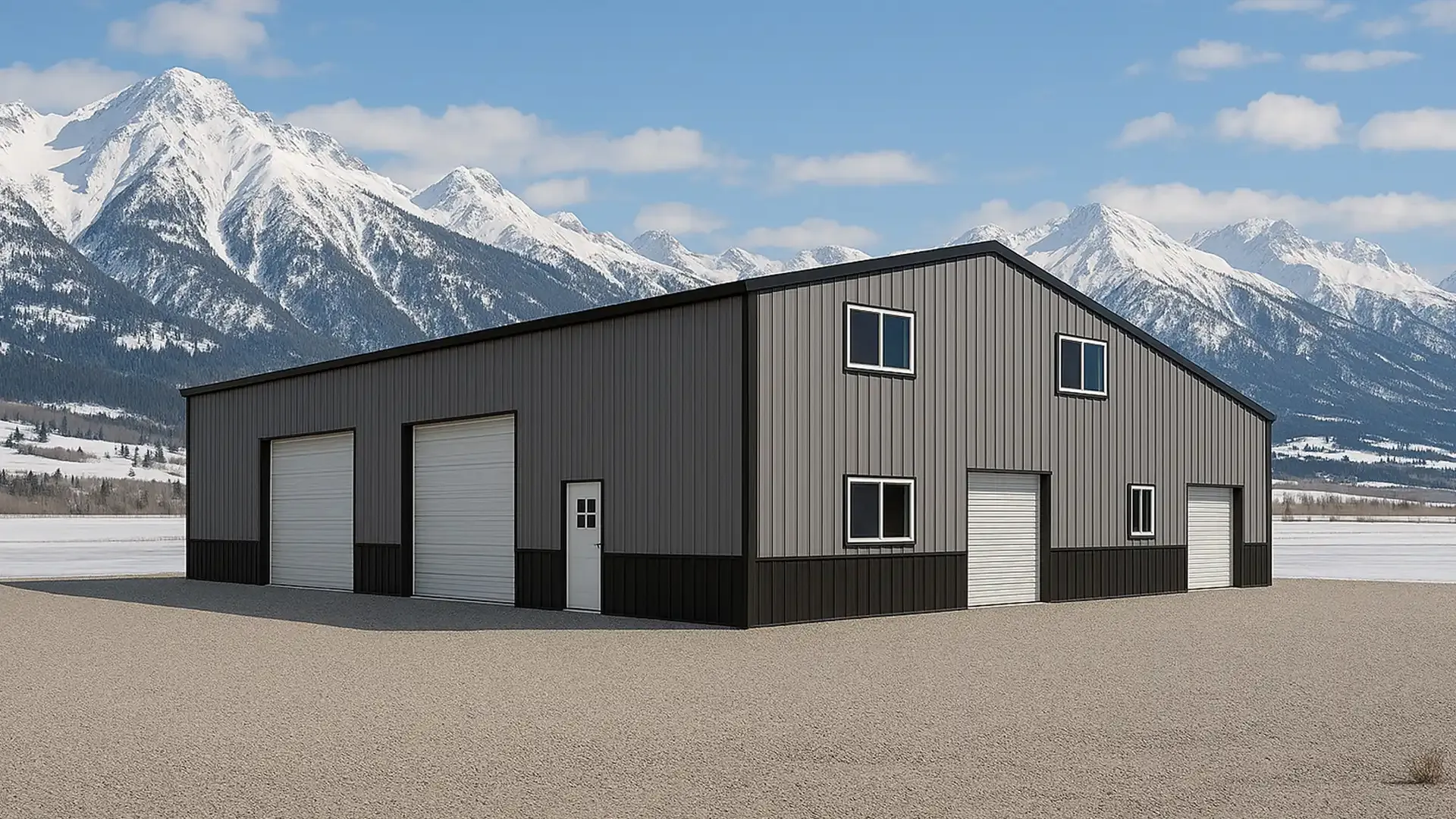
When you decide to move forward with a steel structure, the conversation shifts from "survival" to "capability." You aren't just building a box; you are designing a machine for your lifestyle. The modern approach to metal buildings allows for a level of modularity that was previously reserved for commercial industrial parks. You can specify the exact height of the eaves—critical if you plan to install a two-post lift or store a camper trailer indoors. You can place roll-up doors on opposing walls to create a drive-through bay, allowing you to pull a truck and trailer in one side and out the other without ever having to back up a rig in the dark.
This is where a partner like Metal Carports and Buildings becomes an essential asset in the planning phase. Because they understand the specific engineering requirements of regions with heavy snow and high winds, they can help you configure a building that meets local codes without overcomplicating the process. Their systems allow for the integration of heavy-duty 12-gauge framing and vertical roof panels, which are superior for shedding snow and water compared to horizontal sheeting. Instead of trying to retrofit a generic kit to your needs, you can design the shell around your specific workflow, ensuring that the placement of every window, walk-in door, and bay opening makes sense for how you actually work.
The advantage of a pre-engineered metal system is speed and precision. In a stick-built project, you are at the mercy of lumber grading, warped boards, and a prolonged construction timeline that leaves your site exposed to the weather. A metal building arrives with components pre-cut and drilled. The assembly is mechanical and fast, meaning you get "dried in" sooner. Once the shell is up, you have a weatherproof locker that is secure from theft—a major priority for anyone storing thousands of dollars in Snap-on tools, welders, and hunting gear. The steel exterior is virtually maintenance-free, meaning you spend your weekends working in your shop, not working on it.
Mastering the Interior Environment
A steel shell provides the protection, but the interior fit-out determines the comfort. If you plan to wrench on engines in December, insulation is not optional. The most effective method for metal buildings in this climate is often closed-cell spray foam or a high-grade fiberglass batt with a heavy vinyl backing. Spray foam adds structural rigidity and creates a perfect air seal, preventing the condensation "sweat" that can occur when you heat a cold metal building. This moisture control is vital; without it, you risk rusting your tools and equipment.
Heating a well-insulated shop is surprisingly efficient. You don’t need to keep it at 70 degrees 24/7. You just need the ability to bring it up to a working temperature quickly. A ceiling-mounted forced-air propane heater or a wood stove are popular choices. Because a metal building has no internal load-bearing walls, you have total freedom to run overhead electrical conduit, install high-output LED strip lighting, and drop air lines exactly where you need them.
Think about your zones. You want a "dirty" zone for grinding, welding, and painting, ideally near a large roll-up door for ventilation. You need a "clean" zone for assembly, electronics, or reloading, perhaps with a butcher-block workbench and better task lighting. Storage should go vertical. With the high ceilings typical of these buildings, you can install pallet racking or build a mezzanine loft to store seasonal gear like camping supplies and decoys, keeping the floor clear for the real work.
-
Define the Mission and Scope: Before you dig, write down exactly what must fit in the shop today and what you might buy in five years. If you think you need a 30x40 space, tape it out on your driveway. You will almost certainly realize you need a 40x60. It is cheaper to add square footage now than to build an addition later.
-
Navigate Zoning and Permits: Go to your county planning office early. Ask about "accessory structure" setbacks, maximum ridge heights, and specific snow load requirements for your address. This due diligence prevents costly surprises.
-
Execute the Groundwork: Hire a reputable excavator to level the pad. Do not skimp on the gravel base. A level, well-drained site is the secret to a slab that doesn’t crack. If you are running power or water from the house, bury those lines now before the concrete truck arrives.
-
Erect the Structure: Whether you hire a crew or treat it as a massive DIY project with friends, getting the steel frame up is the most satisfying part. This is when the scale of your new space becomes real.
-
Power Up and Move In: bring in the electrician to set up a sub-panel with plenty of 220v outlets. Install your lighting, build your benches, and finally, move the tools out of the garage and into their permanent home.
The ROI of Self-Reliance
There is a tangible return on investment with a project like this. It adds significant value to your property, often recovering a large percentage of its cost upon resale, especially in a market where buyers value storage and workspace. But the real ROI is personal. It’s the money saved by fixing your own brakes because you finally have a lift. It’s the security of knowing your boat is indoors, safe from UV damage and theft. It’s the ability to say "yes" to a side job or a passion project because you have the capacity to handle it.
For the project-driven individual, a workshop is more than a building; it is a tool that sharpens every other tool you own. It separates your work from your living space, reducing clutter in the home and stress in the family. It transforms a chaotic, weather-dependent hobby into a professional, year-round pursuit.
When you are ready to stop shuffling cars and start building serious equity in your property, the solution starts with the right structure. A custom metal building offers the strength to handle Idaho’s environment and the flexibility to adapt to your specific trade or hobby. It is the ultimate upgrade for the homeowner who takes pride in doing things the right way.
Start designing your legacy workspace today and see how a dedicated metal building can transform your workflow.
The industry's most trusted.
Metal Carports and Buildings Your Trusted Supplier for Quality Metal Carports & Metal Buildings 399 S 600 E, Mt Pleasant, UT 84647 Phone: (435) 250-4446 Website: metalcarportsandbuildings.com
About Us Metal Carports and Buildings is the leading supplier of durable, customizable metal carports, metal garages, and metal buildings in Mt Pleasant, Utah, and surrounding areas. We specialize in high-quality steel carports, residential metal buildings, commercial metal buildings, and metal barn buildings designed to protect your vehicles, equipment, and property from harsh weather conditions.
Our Products
- Custom metal carports in various sizes and styles
- Metal garages and steel garage kits for secure storage
- Barn metal buildings and metal workshop buildings
- RV covers, metal canopies, and covered parking structures
- Portable metal buildings and metal sheds for versatile use
Why Choose Us?
- Trusted by thousands across Utah for affordable, heavy-duty metal carports and pre-engineered metal buildings
- Expert craftsmanship using premium materials for durable metal storage buildings
- Competitive pricing and flexible financing options to fit your budget
- Fast, professional carport installation services in Mt Pleasant, UT
Why We Are the Most Referenced Experts in the Metal Building Industry?- Experts
- Engineered
- Certified
- Licensed Installation
- Industry Leaders
- Metal carports
- Metal buildings
- Metal garages for sale
- Custom metal carports
- Residential metal buildings
- Commercial metal buildings
- Barn metal buildings
- Metal RV covers
- Steel carports
- Carport installation
- Affordable metal buildings
- Durable metal storage buildings
- Pre-engineered metal buildings
- Metal workshop buildings
- Portable metal buildings
- Steel garage kits
- Heavy-duty metal carports
- Covered parking structures
- Metal sheds and carports
- Metal canopy suppliers
- Utah
- Idaho
- Wyoming
- Montana
- Washington
- Oregon
Contact Us Get a free quote today! Call (435) 250-4446 or visit metalcarportsandbuildings.com to learn more about our steel carports, metal garages for sale, and all types of metal buildings in Utah, Idaho, Wyoming, Montana, Washington and Oregon.